২রা মার্চ, ২০২৬ খ্রিস্টাব্দ
সংস্করণ:


Md. Jahangir Alam:
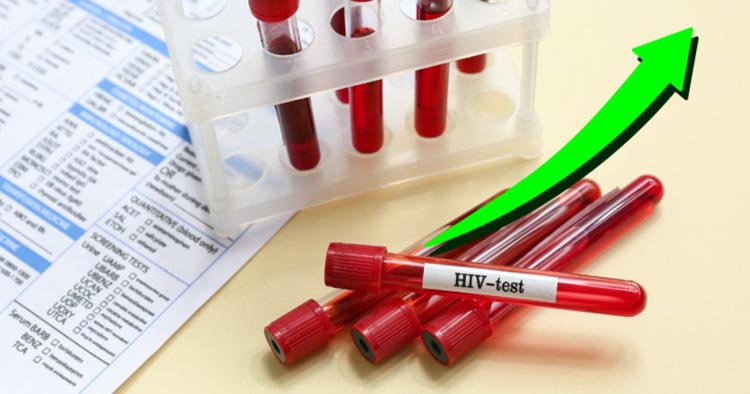
The HIV/AIDS situation in Bangladesh is increasingly concerning. Over the past year, new cases have risen by approximately 39%, with nearly half of the new patients identified as men who have sex with men (MSM). According to data from the Directorate General of Health Services (DGHS) AIDS/STD program, the highest number of new AIDS patients this year were reported in Dhaka district, where 334 new cases were identified. Comilla district recorded 108 new patients, while Chittagong and Khulna reported nearly 100 new patients each. By division, the Rajshahi division recorded the most new cases this year, with Sirajganj district having the highest number within the division.
Experts report that MSM have become a point of societal concern. Although it is unclear exactly who is engaging in high-risk behavior, evidence suggests that infections are spreading from this group to the general population. DGHS data shows that the number of MSM in Bangladesh increased from 111,000 in 2015 to 167,000 in 2023. Current records indicate that approximately 50% of all identified HIV patients are MSM.
Md. Alauddin Chowdhury, Manager (Data and IT) of the DGHS AIDS/STD program, explains that increased awareness among suspected patients, reduced stigma, and expansion of government and NGO HIV prevention and treatment programs have contributed to higher testing and screening rates. This, in turn, has led to the identification of more infections, particularly among MSM.
According to the National Tuberculosis, Leprosy, and AIDS Control Program (TBL & ASP):
Dhaka division reported the highest number of new cases, attributed to high population density, uncontrolled risky behaviors, and limited access to regular healthcare for high-risk populations. This situation coincides with World AIDS Day 2025, observed on December 1. The UN AIDS theme for this year is: “Remove all barriers, build an AIDS-free society.”
HIV was first detected in Bangladesh in 1989. Thirty-five years later, the country has recorded its highest number of infections in a single year. To meet the UN SDG 3.3 HIV targets by 2030, Bangladesh aims to:
Currently, the reality falls short of these targets.
A 21-year-old student (pseudonym: Suman) from North Dhaka is receiving treatment at the ART center of the Infectious Disease Hospital. He contracted HIV after engaging in unprotected sexual activity with a senior member of a local acting training center. Suman was diagnosed after developing a rash and undergoing blood tests at a private hospital, with confirmation at the Combined Military Hospital. He has been on regular ART medication for two months but has not disclosed his condition to his family.
Doctors report that most new patients are young adults aged 20–30. Returning migrant workers and those engaging in risky sexual behaviors form a significant portion of new cases. While ART medication is provided free, hospital resources are limited:
Dr. ARM Sakawat Hossain, hospital consultant, notes a shift in patient demographics, including migrant workers and professionals engaging in risky behaviors, contributing to increased infection risk.
Prof. Nazrul Islam, former Vice-Chancellor of Bangladesh Medical University, emphasizes that while HIV treatment has improved, infection and mortality rates remain high. Factors include irregular treatment adherence, efficacy of medications, and the rising infection rate among MSM. He stresses the urgent need for stronger preventive measures to avoid larger public health risks.
Bangladesh faces a growing HIV/AIDS challenge, especially among MSM and young adults. Despite progress in treatment, gaps in prevention, diagnostics, and healthcare access remain. Urgent action is needed to strengthen awareness, testing, treatment adherence, and targeted interventions to control the epidemic and protect public health.